

A Love Song for My Father
Though he was a Violent Man.


If you read my last post, A Man’s Home is NOT his Castle, you know my father dominated my mother, beat the crap out of her and terrorized the rest of us for years. But that’s not all he was, so I didn’t want to leave you with that impression. It did not make my dad powerful or happy to live up to our patriarchal myth of male dominance. Taking dominion ruined him and led directly to his death, probably by suicide, at the age of 45.
In the end, he was a sniveling husk, sitting in a yellow wingback chair with the black spot on the arm where he had balanced a thousand sweating drinks. Unable to work, he’d fabricated business trips, sales call reports, expense reports, and otherwise phoned it in to the big insurance company he’d worked for for 23 years. When this fraud finally unraveled, his man-of-the-house illusion shattered. Next, he would be fired or worse. The Big Man couldn’t stop crying. He was so depressed that my mother insisted he go into therapy, which, of course, he refused to do. Well, he went to her therapist once, sobbed the whole 50-minute hour to the point of being unable to speak, and never went back.
So, at this juncture, he either ended his own life or had an accident. Fifty years later, the jury is still out. The big insurance company, the same one he’d worked for, paid the claim without investigation. They were taking care of their own, and I respect that. Either way, he was a dead man walking for two years; it just took time for circumstances to catch up to reality.
When I was 17, in the 1970s, my father’s house was a fishbowl, and the water coursing in and out of our gills was so tinged with his man-shame that a single drop turned everything algae green. I just wanted someone to clean the damn bowl and change the water. But the only water available came from a culture that was just as dirty. None of us stood a chance.
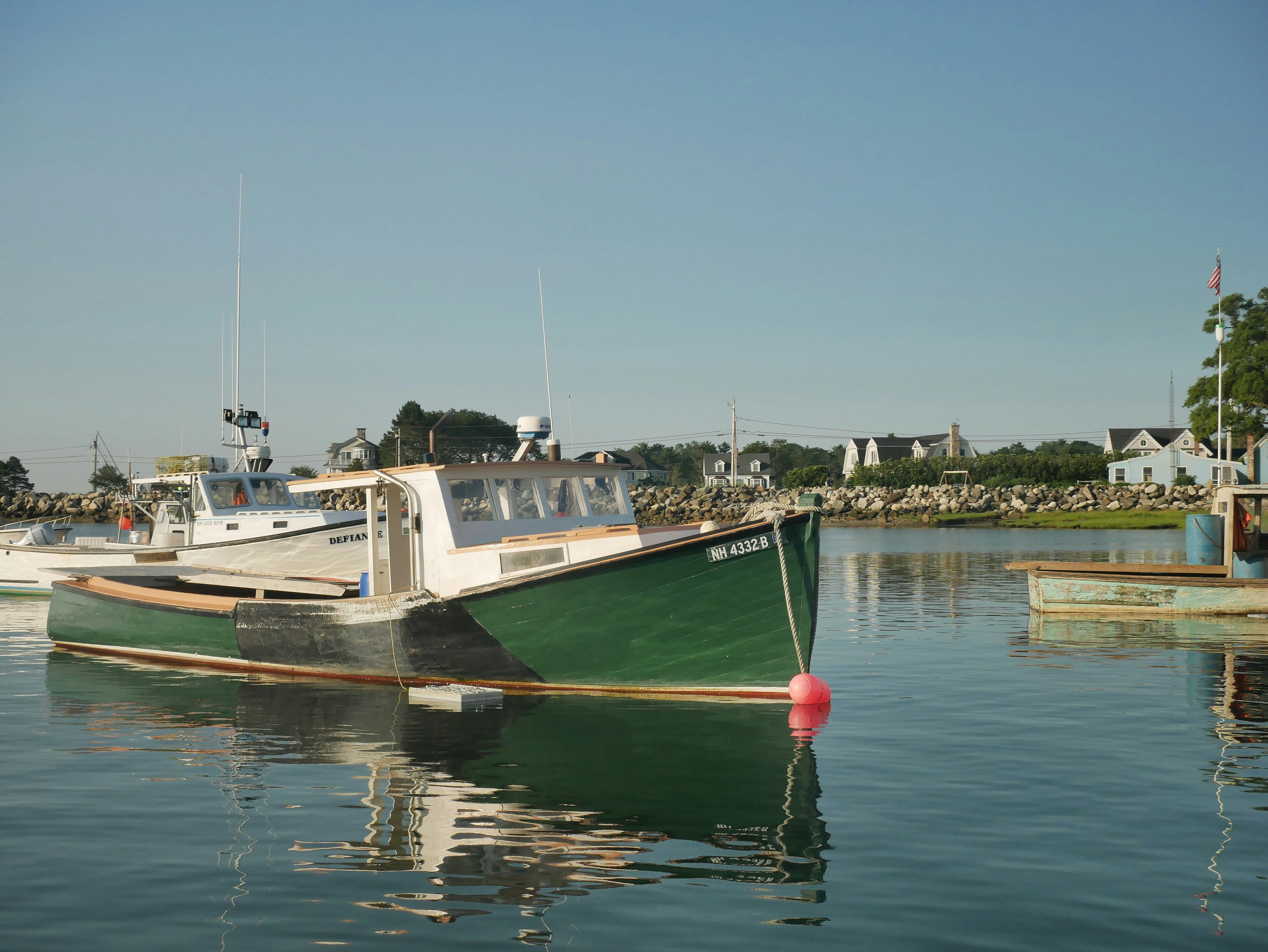
In an effort to save his life, my mother sacrificed her secret escape money, which she had surreptitiously skimmed from her grocery allowance for ten years, to grant his dream, like a fairy godmother, a beautiful Novi Hull lobster boat. He longed to move to Maine and do honest work, man’s work, which was somehow more dignified than selling insurance. He wanted to become a lobsterman. None of his high school-aged children wanted to move, but my mother was willing to make us. She was saving his life.
At this point, Dad was desperately trying to swap out one strong male archetype for another. The suicide rate for lobstermen is twice the national average, but my dad didn’t know that. He was desperate for any solution except the one requiring him to admit he wasn’t in charge, accept his helplessness, make amends to his family, and heal. He’d rather die.
In April 1975, he slipped from his dream boat into the frigid Merrimack River, which still had small ice chunks making their way out to sea at that time of year.

As I write about my father’s death, I hear Joe Cocker singing in my audio cortex, “You are so Beautiful… To me.”
He visited me about 15 years after he died, at Christmas time, while I was home for the holidays after moving as far away from New England as I could get without leaving the country. I was backing out of the driveway to do some last-minute shopping, and was overwhelmed when I reached the curve between the two big pine trees. Destroyed. Flooded. Broken in half by an explosion of love so potent, it hurt. I put the car in park and placed my forehead against the steering wheel and sobbed. With no other choice, I let resistance go. “Daddy?” When the sobbing eased, Joe Cocker came over the radio, “You are so beautiful... To me.” I lifted my head.
My father’s presence filled the car. He surrounded me, holding me and loving me while Joe Cocker sang. And love burst from me in response. That little Saab was brimming.
He’d been a tender, wounded man and a terrifying, violent one. He did the best he could, and he indulged his baser nature like a dog rolling in something putrid. He was at choice and a victim. He was at both ends of the spectrum and the gooey middle. Raised in a culture that uses shame as a weapon to separate the men from the boys, he was thoroughly shamed while insisting he was dominant, alpha, and strong.
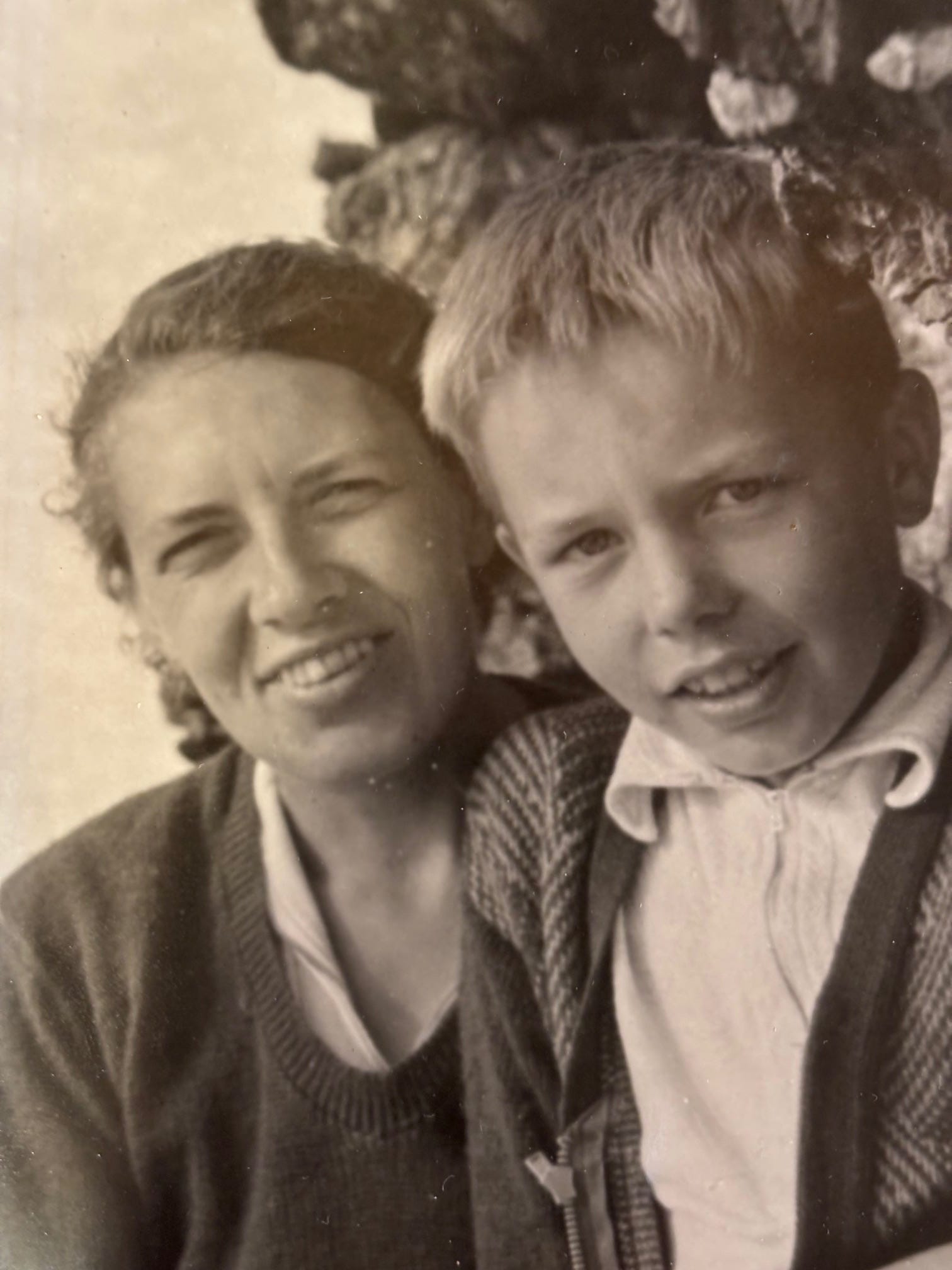
His father, the biological grandfather I never met, was a captain in the Merchant Marines, a great drinker and carouser who had to be shut out of his stepfather’s house when his wife, with a small boy under each arm, sought refuge. When my father was old enough to wonder who his father was, his mother told him she had caught the bastard holding a pillow over his face as he lay crying in his crib. Now, that’s taking “just you shut up” to a whole new level.
Thanks for the bedtime story, Mom.
You’d think she never heard of boundaries, but she had. Her generation’s Dr. Spock, the male authority on child rearing, Dr. Holt, demonized soothing and warned a generation of mothers that they would spoil the future man if they gave in and soothed the baby. Do not pick up that child.
When my mother had her first squalling infant, my paternal grandmother told her of the strength it took to sit on the floor on the other side of a bedroom door, in tears, listening to my father wail. But, Dr. Holt had said, ”Even if it takes 2 - 3 hours, or more.” Every cell in her body clamored for her to rush in there and scoop him up. Her mind overrode her heart. She toughed it out, refusing to do irreparable harm to her future man by showing weakness. This disdain for feminine weakness knows no gender.
My dad’s mom married her second alpha male a few years later. Perceiving squishy weakness in my dad, he set about dominating him. At every turn, he confronted him with a test of manhood, and because he was a boy and his stepdad a man, he never won. Here’s the thing about the dominance game. The winner gets to be the Big Man because the loser becomes the shameful female. In New England’s form of this culture, the loser might be called, “you little pussy,” or (forgive me), “you stupid cunt.” His stepdad thought shame would make him run to the opposite end of the spectrum and want to be a Big Man more than anything. It did.
The last thing you wanted to be was female. Most of us females didn’t even want to be female. I sure didn’t. And when my mother was fighting back, when she wanted to inflict the maximum retaliatory pain, she used shame, too. Why wouldn’t she? It’s the most potent weapon in the cultural arsenal - the nuclear option.
When Dad was old enough, he enlisted in the army to fight in Korea to prove he was a Big Man. His stepdad clapped him on the back and told him it would make a man of him. It did. He survived the ritualized hazing and shaming of boot camp and was deemed tough enough to enter a war zone. When he returned, he had that taste for scotch, and my mother decided she’d teach herself to like it rather than be left behind.
One night, after years of scotchy stories of the front lines, of men falling to his left and right, of crying for friends lost, my father bragged that he was so clever and skillful at playing the officers, he got himself assigned to the officers’ club as a bartender, the best job on the base. Obviously, those Big Men liked and respected him.
My mother pulled up. Wait, what? You were a bartender in the war?
After this, she called him “the big war hero.” This knife always went smoothly in, all the way to the heart. So, he pulled out his ultimate weapon, violence. She’d laugh at him through bloody teeth and spit, “Big Man.”
Did patriarchal shaming condition him at school, too? As a veteran high school teacher, I can tell you this is unavoidable. It’s in the algae water of our collective fishtank. Why would school be a haven from patriarchal shaming? Nowhere else is. So, every breath he drew from infancy onward was shaped by our patriarchal mythology. This conditioning into the prevailing myth started when the doctor held him upside down by his ankles and slapped his ass when he was born.

We all know, by now, that monotheistic patriarchal religion, specifically Christianity, is another myth, right? Christopher Dawkins and other atheists who claim to be “cultural Christians” certainly know it. They just want to keep the parts that serve them. Throw out God, but keep the patriarchy. Why wouldn’t they? Job done.
Is it worse now that we have all these toxic forums pumping testosterone directly into the veins of the manosphere? Yesterday, I saw a clip of a popular influencer, all pumped up on false bravado, claiming that no one can “fuck my wife like I can.” Seriously. If I were at the taping, I would have asked him to prove he has a wife. What woman would choose to be in a relationship with that? This is the root cause of the male loneliness epidemic, though women’s overachievement, since some constraints were removed fifty years ago, is usually blamed. Looking at you, Scott Galloway. Though you are right about the effects, you’re wrong about the cause. Who wants these guys? They have work to do, which no one can do for them.
The arguments about testosterone being the cause, that this is men’s natural state, that they can’t help it because nature made them this way, are B.S. Men aren’t naturally bad, or cruel, or violent. They aren’t naturally seeking sex and nothing but sex with every waking minute, willing to take it by violence if necessary. That’s cultural, too. Patriarchy is not a natural state; it’s a perversion of nature so men can be in charge. It’s our mythology, and it is so unnatural, it has to be constantly reinforced. These influencers are pumping undiluted shame into young men, and what they think is the antidote to shame, bravado, which, unfortunately, is another flavor of shame.
There is also a potent online counterbalance to the manosphere. There have never been more people who can see the cultural myth for what it is and are actively working to counter it—men like Michael Mead at Mosaic Voices and Ian Mackenzie at the Mythic Masculine, to name a few. And all those beautiful feminists, bringing the receipts, who refuse to take it anymore. We’ve reached a tipping point.
But there weren’t many countervailing voices when my mom and dad needed them. There was none of this leavening in the prevailing myth. My mother couldn’t even get a damn credit card on her own, and the police just stood on the threshold asking my father to “please, just go to bed.”
But the myth of male dominance was never true. Before this, all three Abrahamic cultures were matrilineal and matrilocal. They were womb-forward and child-rearing forward. Matri-focal. Women owned the land and had political power. Males displayed; females chose - like so many things, the opposite of how it is today. And unchosen males were cut loose unless they could find a female who’d accept them. Incels became lone wolves because, in nature, not every male has the right to mate. They just don’t. You can see how patriarchy is a reaction against what’s natural, and you can see, worldwide, where that’s gotten us. Myths, stories about reality are not reality. Myths merely propose a theory. Reality is not touched by them at all.

My poor father and all his hapless family were made of love the whole time. We just didn’t know it. We couldn’t see our cultural conditioning and therefore never questioned it. We all suffered greatly from what I now think of as a cultural betrayal. Little boys aren’t born with horns, and little girls aren’t born with halos. That’s culture. Little boys are made of love. Originally, no sin involved, my dad was made of love.
I like to think my father knew this when he visited me after he died. I don’t want to sound like a woo-woo new age wingnut who sees ghosts everywhere, but the love that surrounded me that day in the car was like being inside a snow globe where the flakes were made of golden light. He was love; I was love. We mingled in the air for two and a half minutes while Joe Cocker sang. It was eternity. Then, he withdrew.
He was showing me that he understood, finally. Everything is love. His specific personality colored the love in the car golden. It was sort of an ambush. I knew it was him, though even fifteen years after he died. I didn’t doubt it; I still don’t.
He visited me like that one more time, at a Father’s Day Dance Home ritual, probably ten years later. I was dancing with a man I’d just met, and before he let me go, the next song came on. You Are So Beautiful. And just as the time before, all the love was there. It was my dad, coming through that man’s eyes and heart, loving me through that man.
I whispered, “My dad is here.”
He nodded. “I know.” And that beautiful stranger surrendered himself further and held me while I sobbed into his chest. He cried too. Who wouldn’t?
I tear up every time I hear that song, but it’s not the same thing as a visitation. When he was there those two times, it was active. Love as a verb. All other times, it’s sentimental. I don’t understand it. I don’t know how it’s even possible, but it happened.
I just tell myself, “There are more things between heaven and earth, Horatio,” and let it go with a wistful smile. I wish I could have known him without all that shame. I wish he’d had the courage to face the music, accept being fired, go into therapy, and make restitution. I wish he’d had the courage to heal. But I’ve gone through the process of emotional debridement, spent my years in the fetal position, and I know why he was afraid. Still, I wish I’d had a father capable of expressing that much love. Now that would have been a father.

If you read to the end, please leave your heart, so my heart will find it. It lets me know you were walking beside me. I count them, you know… those hearts. If you were moved at all, restack, please. Subscribe if you’d like to join me on this mythic journey of healing our culture, or please upgrade to a paid plan if you can. Thank you for being here. You mean the world to me.
I’d love to know what you think. Please comment, it’s my favorite part of Substacklandia, the comments.
Here’s Why I Don’t Have a Tip Jar or Buy Me a Coffee Button
If you are one of the wonderful people, moved enough by something I wrote to leave a tip, please understand that it helps me more in the wide, wide world of publishing if you would become a paid subscriber for a month or two… or a year. Substack will notify you before they charge you again, so you can unsubscribe when you want. It shows the small presses considering my novel right now that there are, indeed, people willing to pay to read what I write. Anything you can do to support my publishing path is greatly appreciated. A one-month subscription is less than what most people would put in a tip jar, and it helps me far more.

This: "Little boys are made of love." Absolutely true. And yes, the patriarchy ruins them, and adopts them as its own. This is a devastating, brilliant essay.
Thank you for saying that. You are welcome from the bottom of mine