

Meeting My Own Threshold… Guardian

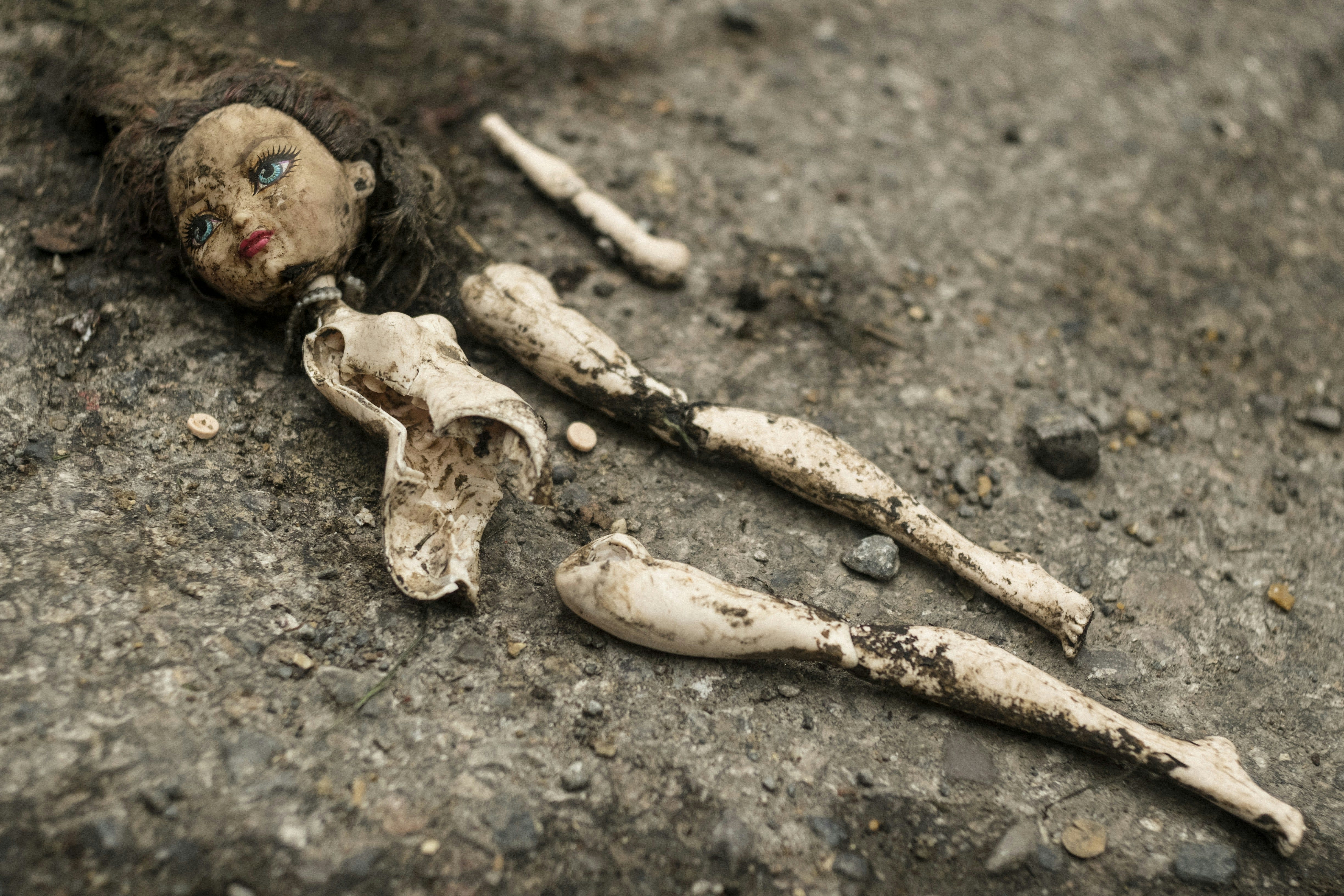
Last week, my short story, “Meeting Death,” won the fiction prize at The Story Magazine published by the Heroine Society. I felt like a stunned Sally Field accepting an Oscar she feared she didn’t deserve.
For three tender, weepy days, the fear that had been holding me back as a writer (for the last few decades) released through my eyes with shuddering, open-mouthed sobs which curled my bones into the fetal position. You’d think I’d just received a life-ending diagnosis.
And I wasn’t going to tell you about it because I assumed you don’t want to see my messy process. Plus, it makes me look… unprofessional. Vulnerable. Like I’m not used to being published… which I’m not.
Finally, my husband asked: “Are you going to write about this for your post Thursday?”
“No.” I blinked. “They’ll find out when it’s published. That’s not what Modern Mythology is for.”
For Modern Mythology, I write nonfiction essays about the personal and collective myth-making that shapes our patriarchal worldview, the way it shepherds our ignorance into political outcomes. All those story reasons that logic (and reason) never changes anything for long. I seldom write about my fiction practice, but they feed one another and arise out of the same fierce feminism.
Those saltwater days melted a stoic belief system I was raised in, the don’t-blow-your-own-horn ethos that told me it would be better, stronger, and more meaningful if you found out for yourself. Surprise! I write fiction. You’d respect me more. Because that’s what I was taught to want. Respect. In our hierarchy, that’s where status comes from (confused with self-respect), and why, in my culture, we bear everything stoically - so no one will find out.
Stoicism is soooo patriarchal. The New England where I grew up is so stoic we were barely allowed any feelings at all. Unless you were drinking, and then you were given a pass as long as you didn’t insist on talking about your messy feelings while sober, because no one in their right mind can respect that. They’ll mock you back into line.
Well, that had to die.
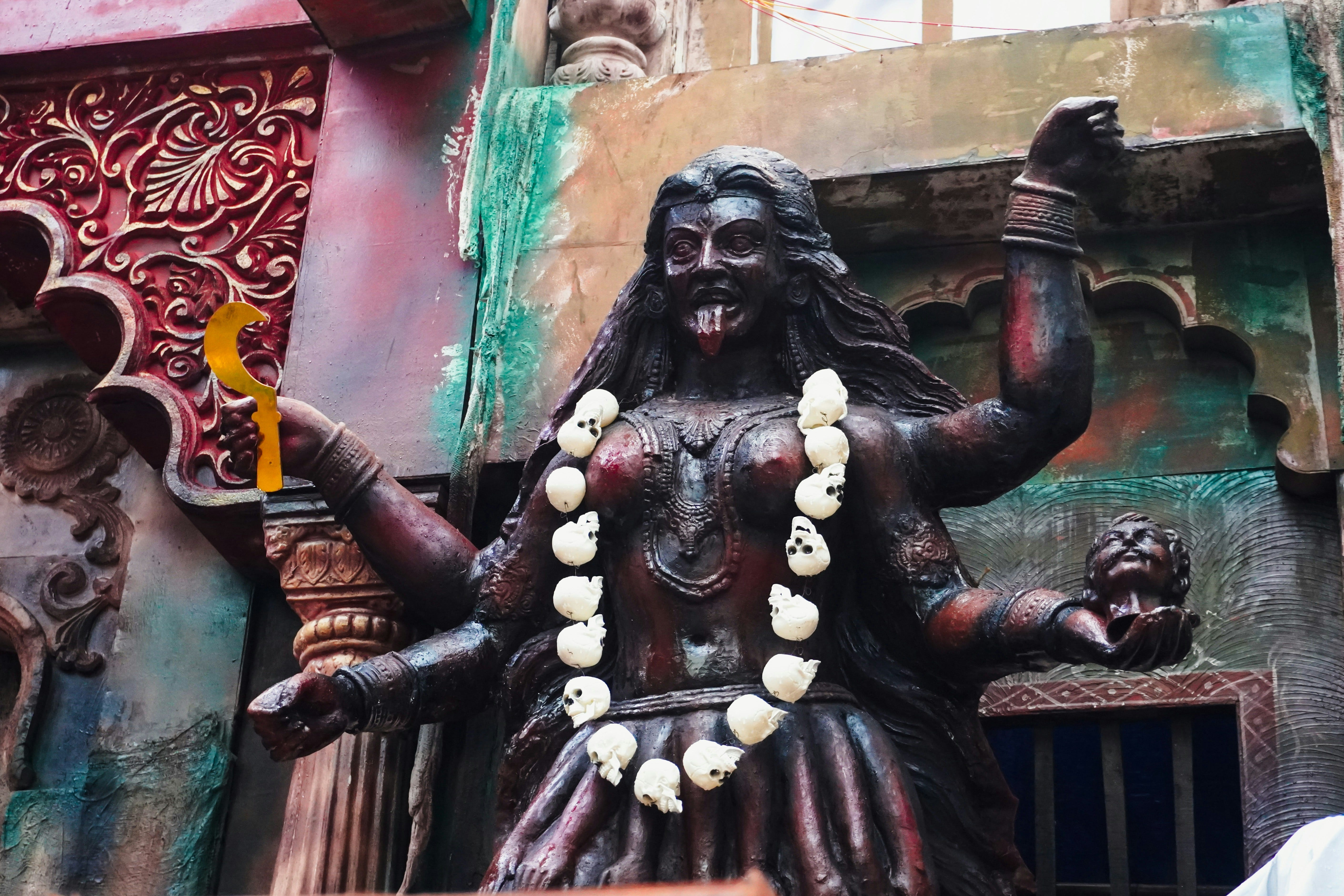
In the short story, “Meeting Death,” the main character approaches her terrifying threshold guardian, who later becomes her spiritual ally and teacher, Death. Because isn’t Death the monster we’re all afraid of? And isn’t she the guardian at every threshold?
In the historical moment of my novel, Eleusis, from which “Meeting Death” was lifted, the old matrilineal ways of mother law have been relegated to isolated temples in a vast sea of patriarchy determined to wipe them off the map. This violent overthrow of the past included the burning of whole libraries so we, the future, would never know that there was ever any other system of culture than the ferocious patriarchy we were born into.
And it worked, too. We have about 1% of the literary output of the whole ancient world. If I asked the vast majority of my high school students how old the world was, most of them, before thinking, would say two thousand years. The world started when the calendar did. Mission accomplished.
“I have come to destroy the works of the female.”
That’s Jesus, speaking to Salome, according to the Gospel of the Egyptians discovered at Nag Hammadi. That’s the patriarchal project in a nutshell. The “works of the female” in this case is mother law, the indigenous worldview patriarchy replaces. Everything that creates life - the material world, bodies, the cycle of procreation and birth - leads directly to decay and death. It is therefore… bad. And females are… bad. And wanting sex is… bad. The physical world of original sin doesn’t matter except as the container for your behavior when it comes to your Afterlife Entrance Exam. Presto! Internalized obedience to an ideological system that goes against nature.
Hence the need for control. Dominion. Domination. Oppression. Yikes.
Well. Don’t worry. That’s never going to rise to the level of Puritan fascism. Right?
You can look around you and see the outcome of this denial-of-death worldview, and the blaming of “the female” for the fact that we die. Sheesh. Patriarchy is the wrong system addressing the wrong question and worshipping the wrong gods. The problem was never that we die; the problem to solve for is how we should live knowing that we do. And patriarchy, with its thrust for status, wealth, and power at all costs, sidestepped the whole question by refusing to feel. After that, you can do anything.

Well, feminists have risen up to restore the works of the female. To support her, listen to her, and believe her. To uphold her in our laws and systems and provide for her. Everything she needs to support life and restore justice.
You know that old quote about the arc of the moral universe being long, and all that? Just ask any displaced, massacred, colonized, or marginalized community how that’s going. How many millennia does it take? It makes me want to pound the back seat of the Oldsmobile and ask, “Are we there yet?” on repeat.
That kind of false hope makes us passive, waiting for some overarching thing called “the Universe.” Well, it doesn’t bend toward justice unless we grasp the ends of the horseshoe, in our own human hands, and pull ourselves together. If we lack the moral courage, that same universe will hum along in flagrant disregard for justice for another 10 thousand years. The gods are amoral. That’s the piece humanity is supposed to provide. We do have a function.
So, it seems logical to me that the answer to the whole human catastrophe is to question the belief system that caused it. Stop. Turn. And welcome our terror rather than continuing to mindlessly act it out on the world stage. That’s personal mythology (as in “why I am the way I am”), and collective mythology (as in the patriarchal control of life itself for power and profit).
In the refusal to meet the terror of death, our Western Civilization has, for centuries, justified one unspeakable horror after another. The collective weight of our decision-making is now pressing on every load-bearing wall we’ve created to avoid our terror of death, leading to a complex systems collapse some are calling “the great simplification.”
I like that name. It traces a trajectory in the sky, an arc, if you will, for the unsolvable mess we’re in right now. Simplification, done to us rather than for us.
So, who is the guardian at the gate of our current in extremis moment? Death, of course, our own, yes, but also of the whole natural world. What are we most afraid of? That we have gone too far, that there is no way back from the domino effect of disasters we’ve touched off.
And that’s the truth, isn’t it? When we stop avoiding this threshold, stop running, stop screaming at each other, stop living in our air-conditioned heads, stop problem-solving to keep parts of the old system and reject others. Can we accept our demise? Isn’t this what every person has to do individually: face our own annihilation? Now, we have to face it collectively, too. At least that’s the fear. To find out if it’s real, we have to risk walking past the threshold guardian.
Still with me? Didn’t click off and run? Good.
Isn’t Death, in so many forms, the guardian at every single gate?. If there is another form for this archetype, I’ve never seen it.
So, that 2nd chapter of Eleusis, which I modified to become the short story, “Meeting Death,” will be published by The Heroine Society on August 1st. On the 13th, Lisa-Marie Cabrelli, Ph.D. will interview me on a Substack Live about the writing of that story, and on the 16th, I’ll be a featured speaker on a panel about threshold guardians in fiction. Not only are they publishing my story, but it also won the fiction prize, so it will be considered for inclusion in the year-end anthology.
Maybe all those tears have melted that old stoic belief system, the terror, based on experience, that I’ll be ridiculed. Mocked. Bullied. Held up as an example of what not to be. Shunned or piled on. My threshold guardian.
Maybe a thing like that has to die a thousand times. Dead now, or not, I hope you’ll join me in some or all of this month’s festivities surrounding the publication of “Meeting Death.” I’ll send you updates and links when I have them.
As always, thank you for being on this journey with me, this wild ride, as all of us insist that this cruel system of domination and patriarchal control is only one belief system - not natural, not right or true, and ultimately, as we can see all around us - not sustainable. And that, I think, is the good news. We just have to become willing to die however many times it takes.

If you read to the end, please leave your heart, so my heart will find it. It lets me know you were walking beside me. I count them, you know… those hearts.
I’d love to know what you think. Please comment; it’s my favorite part of Substackland, interacting with you in the comments.
If you were moved at all, restack, please. Subscribe if you’d like to join me on this mythic journey of healing our culture, or please upgrade to a paid plan if you can. Thank you for being here. You mean the world to me.
A Note About Why I Don’t Have a Tip Jar or Buy Me a Coffee Button
If you are one of the wonderful people who are moved enough by something I wrote to leave a tip, please understand that it helps me more in the wide, wide world of novel publishing if you become a paid subscriber for a month or two… or a year. It shows the small presses currently considering my novel, Eleusis, that there are, indeed, people willing to pay to read what I write.
The process of finding the right home for a story is a long one. Anything you can do to support my publishing path is greatly appreciated. A one-month subscription is less than what most people would put in a tip jar, and it helps me far more. Substack will notify you before they charge you again, so you can unsubscribe from paid and resubscribe as free whenever you want. In any case, thank you for being here.
I am pleased you took my suggestion. You've let so many others see your process and the esteem in which others view you! Well done!
Thank you for writing 100% human