

Oh! It’s Heaven to Enter that Pearly Gate
Or… Is that a Pearly Sheen I Smell?


The combination of the Moon Gate of Heaven and pearls representing the Great Mother dates back at least 6,000 years. Although the first mention of a specifically Pearly Gate is found in the Book of Revelation, Christianity emerged in a world that already existed, rich, fully nuanced, and full of flavor.
The pearl is a symbol of Isis, Aphrodite, and many other feminine gods, including Mary, herself a syncretized god much older than Christianity, whom Origin, the early Christian scholar, called “mother of us all.” The moon is the mother god’s vulva; her pearl is a portal. Aphrodite Marina’s body was said to be the gate to heaven. Souls were born into the world through her gate, and after death, they departed through it as well.
Egyptian priests referred to the moon as the "Mother of the Universe" because her light was believed to make things moist and fertile. The Egyptian symbol of the World Egg was an embryo inside a woman’s womb. They saw the moon as the vagina of Ma’at, and they called her the “Moon Shining Over the Sea.” It’s not hard to imagine earlier people looking up at that moon and seeing the mother’s vulva shining, pearlescent, above them.
The Cosmic Mother was called the Pearl of the Sea or the Pearl of Wisdom (I’m soooo tempted to add: of great price, but I’ll restrain myself). She was also known as the Holy Dove (Hmmm, an earlier version of the Holy Spirit?). As Mother Night, she brought forth the World Egg, the moon, which the serpent, with his tail in his mouth, coiled around seven times until it split into two halves: Heaven and Earth. The Greeks called this serpent Okeanos, the sea serpent of the ocean.
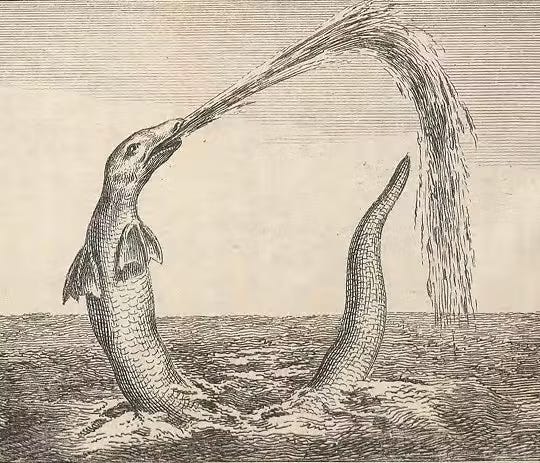
An aside: Zeus, in the form of a serpent, impregnated Persephone before she became his daughter, proof that she is much older than the hapless maiden who was abducted by her uncle with the permission of her father, and raped on her marriage bed. Many scholars think she is far older than Zeus and take that story as an accounting of the switch over to patriarchy and the undermining of maternal authority, matrilineal inheritance, and the overthrow of the matrilocal system of the husband joining his wife’s household, and maternal brothers serving as male role models because fathers just weren’t that important. They came and went, but the uncles were family. I smile every time someone says that when we were matrilineal, we didn’t know where babies came from. Because women kept and bred animals, they knew.
The mother god’s trinity makes easy common sense when compared to the male version, which requires considerable theological explanation. Her moon phases, waxing, waning, and full, are the maiden, mother, and crone, aspects of the same god, three in one; one in three. When the crescent is showing, we know the rest of the moon is still there.
At the turn of the year, as the world began waxing, the mother’s gate was called ‘Life in Death,’ representing the renewal that flows into Spring after the dead of winter. Then, as the year waned and the dead flowed back to their mother, the gate was called 'Death in Life.' Souls of the dead (not just people) ascended through this gate and attached to the inside of the mother’s womb to suck in her regenerative power before being reborn.
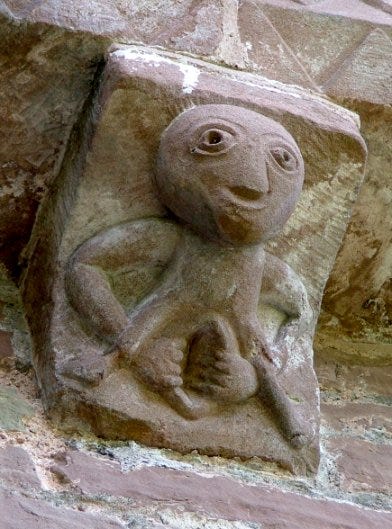
The moon is the mother’s vulva, the Abyss, the Vesica Piscis. Ancient people looked up in worship as she stood over the earth and all her creatures, perhaps a benign form of upskirting. The Orphic cult saw the moon as the home of the dead, a female yoni through which souls pass on their way to Paradise. The Egyptian Abtu, the Western Gate where the sun sets, was called the “fish who swallowed the penis.” The Celtic Sheila-na-gig shows the gate of birth as another form of the vesica piscis, the almond-shaped nether-mouth of the vagina.
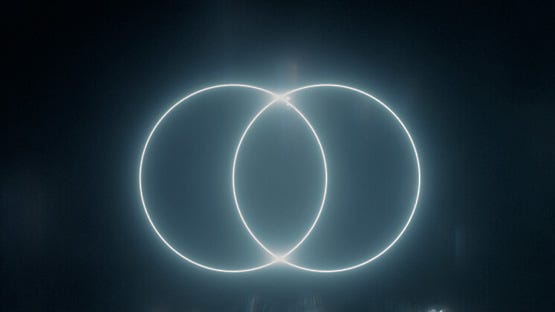
You may know the Vesica Piscis as the Venn Diagram. Hard to imagine how many yonis middle school teachers have set before their innocent children. The Right Wing’s Christopher Rufo, the ideological father of Moms for Liberty, should probably put a stop to that. To the ancients, though, the god’s vulva was the portal of life, where the sacred and the earthly met, the entrance to heaven, a pretty apt description of sex if you ask me. Jugians call it a mandorla, the symbol of the Self.
After I made love to the man who would become my husband for the first time, he shone with a halo as bright as any saint’s. His whole body glowed. He was vulnerable, healed, and enlightened. And he has been devoted to me ever since, though I freely admit that I haven’t always been easy to love. For 33 years, I’ve carried that image of his face, his awestruck wonder when he looked at me that morning after. That light has allowed me to see him clearly, when everything in me wanted to project my darkness all over him. No wonder church fathers made sex so sinful as a means of controlling both women and men. No wonder they seem afraid of it (ahem), us. That’s some pretty awesome power, there.
Ancient mathematicians referred to the Vesica Piscis as the bladder of the fish. The ratio, 265:153, was referred to as the ratio of the fish. Closest to the square root of 3, the trinity, 153, was referred to as the measure of the fish. It birthed our understanding of the Golden Ratio, the rule of beauty and design in nature, art, and architecture. Jesus’s second miracle was for Simon Peter to draw up exactly 153 fish in his previously empty nets. A remarkably specific number, that. The Pythagoreans viewed it as a means to comprehend the entire universe through mathematics.
The Vesica Piscis adorns the cover of the Chalice Well, the Red Spring, in Glastonbury, which is associated with Mary, the Cosmic Mother. But how could she be the cosmic mother if she was only a sinful human woman, born two thousand years ago, not a god at all, as various branches of Christianity have insisted?
Jesus, Iththys, was a fish who came from the fishy womb of god. Early Christians recognized each other by drawing a Vesica Piscis in the dust. But the original Iththys was the son of the Syrian goddess, Atargatis, a pre-Christian symbol of abundance, life, and the regenerative power of females. Images of the ascension of Christ often depict Jesus, the Ichthys (fish), rising into a heavenly vesica as if returning to his mother’s womb, the portal from the earthly to the divine. Pearly Gate, indeed. The fish symbol and the word "fish" were synonymous with the womb, the eternal source of life. Put that in your holy grail and drink deeply.
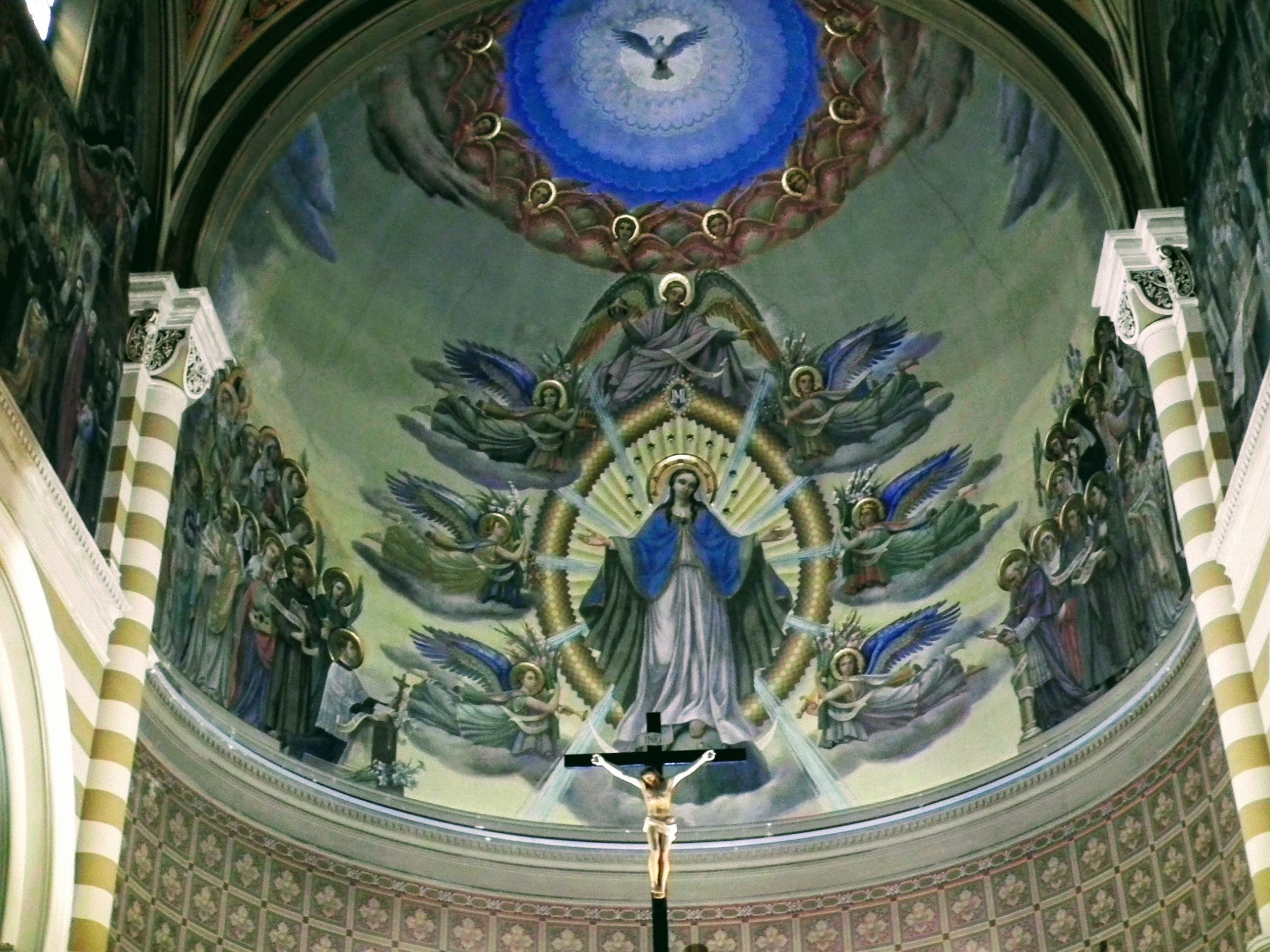
Worship for the divine feminine is hidden throughout our churches and cathedrals. For example, the mandorla serves as the entrance to many a cathedral. We enter the womb of god through the portal of the divine feminine. And why is that door painted red? Ah, but the magic of menstrual blood is a topic for a whole separate post. Soon come.
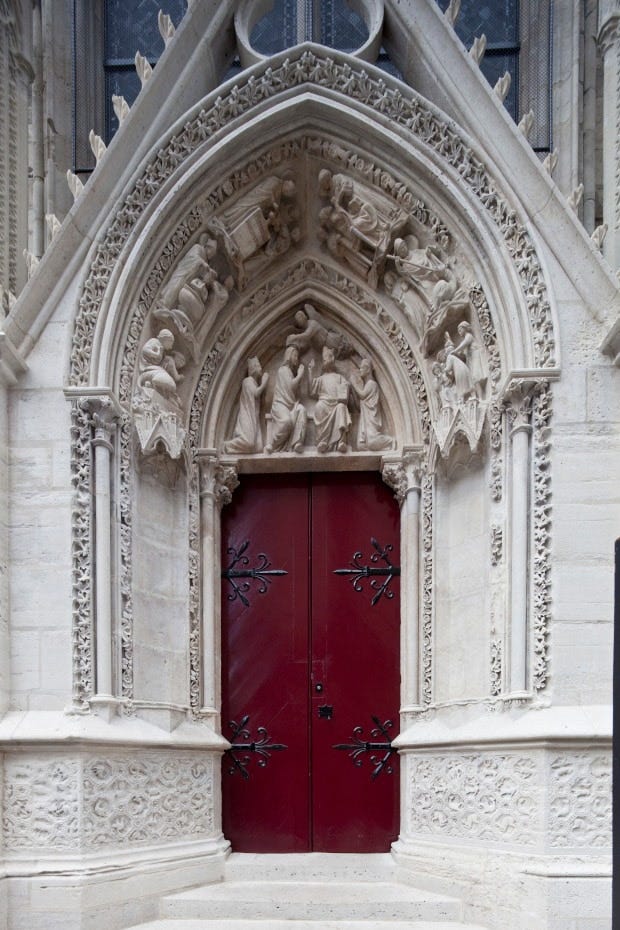
Powerful men have excised the divine feminine from religion by appropriating all her potent symbols and refusing to let women serve any sacrament except dinner. Yet, there were hundreds of early Christianities, and a significant number, such as the Maronites, had women in positions of power. They were systematically wiped out, but some people still insist on worshipping Mary, though the church makes a sharp distinction between veneration and worship. But if you scratch the surface, the divine feminine is still there under the gloss of all those centuries of patriarchal control. And if you close your eyes and ask, she will surge through you and let you know: she hasn’t gone anywhere.
The appropriation of these feminine symbols smells pretty fishy. Maybe Freud got it backwards: penis envy is the myth, and womb envy is the real motivator.

Please like, share, and comment. I love to know what you think. I also love it when you support my work by restacking, subscribing, and upgrading to paid.
"Powerful men have excised the divine feminine from religion by appropriating all her potent symbols and refusing to let women serve any sacrament except dinner." You got that right. I love the part where you describe your husband's devotion to you. Smart man. xo
Yes! What a powerful motivator of envy. I was just randomly thinking this and of how men are so afraid of women these days still. Why? Because we are the bringers of life and they can’t handle the idea that they are not in control over everything. Even that.